You have studied for weeks, maybe months. You feel ready. And then exam day arrives and you realize - wait, what do I actually need to bring? A solid test day checklist can mean the difference between walking into your exam confident and collected, or frantically searching for your ID in the parking lot while your heart races.
Here is the thing: forgetting something crucial on exam day happens more often than people admit. Every testing center has stories of students turned away because they brought the wrong ID, forgot their admission ticket, or showed up with a prohibited calculator. All that preparation, potentially wasted because of something completely avoidable.
This guide covers everything you need for exam day preparation - what to bring, what to do the night before, your morning routine, and test day mistakes to avoid. Whether you are taking the SAT, GRE, MCAT, LSAT, or any professional certification exam, consider this your ultimate preparation resource.
Essential Documents: The Non-Negotiables
Let us start with the absolute must-haves. Missing any of these items on your test day checklist could mean you do not take your exam at all.
Valid Photo Identification
This is number one for a reason. No ID, no exam. Period. Most testing centers require:
- Government-issued photo ID (driver's license, passport, state ID, military ID)
- ID must not be expired - check the date well before exam day
- Name on ID must match your registration exactly (including middle names or suffixes)
- Photo must be clearly visible and recognizable as you
Admission Ticket or Confirmation
Your what to bring to exam list definitely includes your admission ticket:
- Print your admission ticket even if digital versions are accepted
- Some exams require tickets with your photo already attached
- Save a digital backup in your email, just in case the paper gets damaged
- Know your testing center address and your scheduled start time
For major standardized tests, check the specific requirements. The GRE and LSAT have specific admission ticket requirements you should review ahead of time.
Exam-Specific Items You Cannot Forget
Beyond documents, your test day checklist needs to include items specific to your exam type.
Writing Materials
For Paper-Based Tests:
- Number 2 pencils: Bring at least 3-4 sharpened pencils (mechanical pencils are often prohibited)
- Erasers: Pink rubber erasers work best - avoid those that smear
- Pencil sharpener: A small handheld one, if allowed
For Computer-Based Tests:
- Most materials are provided by the testing center
- You will usually get scratch paper or a whiteboard
- Check if you need to bring anything specific for your exam
Approved Calculators
Calculator rules vary wildly between exams. What you need on your exam day checklist:
- Verify your calculator model is approved for your specific exam
- Replace batteries the day before - dying mid-exam is stressful
- Clear any programs or stored data if required (some exams check)
- Bring a backup calculator if possible and allowed
For exams like the SAT, GRE, and GMAT, check the official approved calculator lists. Using a prohibited calculator can void your entire exam. Our math exam preparation guide covers calculator strategies in more detail.
Watch or Timing Device
Time management is crucial, but what to do on test day about timing?
- Bring an analog watch or basic digital watch without smart features
- Smart watches, fitness trackers, and Apple Watches are prohibited at most testing centers
- Test your watch beforehand to make sure it works properly
- Computer-based tests usually have on-screen timers, but a backup does not hurt
The Night Before: Your Preparation Checklist
Exam day preparation really starts the night before. Here is your evening checklist:
Pack Everything Tonight
Do not wait until morning when you are groggy and potentially running late. Pack your bag the night before with:
- Photo ID - put it right in your bag where you will not miss it
- Printed admission ticket
- Calculator with fresh batteries
- Pencils, erasers, and other approved supplies
- Your watch
- Snacks and water for breaks
- Light jacket or sweater for temperature control
Prepare Your Clothes
Lay out what you will wear. It sounds basic, but eliminating morning decisions helps:
- Comfortable clothes that are not too tight or distracting
- Layers - testing rooms vary from freezing to stuffy
- Avoid anything with excessive pockets or hoods if your exam prohibits them
- Comfortable shoes for walking to the testing center
Get Proper Sleep
Sleep is not negotiable for good exam day performance:
- Aim for 7-8 hours - your brain consolidates memories during sleep
- Avoid screens for an hour before bed
- Do not study right until bedtime - give your brain time to wind down
- Set multiple alarms so you do not worry about oversleeping
If test anxiety keeps you awake, our guide on overcoming test anxiety offers techniques for calming pre-exam nerves.
Morning Routine Before Test Day
Your morning routine before test sets the tone for your entire exam. Here is how to start right:
Wake Up Early
Give yourself at least 2 hours before you need to leave:
- Time for a relaxed morning routine without rushing
- Buffer for unexpected issues like traffic or last-minute problems
- Opportunity for light review if desired
- Space to eat a proper breakfast and use the bathroom
Final Bag Check
Even though you packed last night, do one final test day check in:
- ID is in your bag - physically confirm it
- Admission ticket is ready
- Calculator still has battery power
- You have everything from your checklist
Quick Mental Preparation
A few minutes of mental preparation can help:
- Take 5 deep breaths to center yourself
- Visualize yourself calmly working through the exam
- Remind yourself that you have prepared for this
- Avoid heavy studying - light formula review at most
What to Eat on Test Day for Peak Performance
What to eat on test day matters more than most people realize. Your brain runs on glucose, and the right nutrition supports focus and memory.
Breakfast Options
Eat 1-2 hours before your exam. Good options include:
Brain-Boosting Breakfast Ideas:
- Eggs with whole grain toast and avocado
- Oatmeal with nuts, berries, and a drizzle of honey
- Greek yogurt with granola and banana
- Smoothie with protein powder, fruit, and spinach
- Whole grain cereal with milk and fruit
What to Avoid
- Heavy, greasy foods that cause sluggishness
- Excessive sugar that leads to energy crashes
- Too much caffeine that increases jitters and anxiety
- Anything that might cause digestive issues for you personally
Snacks for Breaks
Pack snacks for exam breaks. Quick, energizing options:
- Nuts and trail mix
- Granola bars
- Fresh or dried fruit
- Cheese and crackers
- Dark chocolate in moderation
Proctored and Online Exam Checklist
Taking a prometric test day exam or other proctored test? These environments have additional requirements.
Testing Center Exams
For Prometric, Pearson VUE, and other testing centers:
- Arrive 30-45 minutes early for check-in procedures
- Expect palm vein scanning, photographs, or biometric verification
- Store all personal items in provided lockers
- Turn out pockets before entering the testing room
- Understand break procedures and time limits
Online Proctored Exams
Taking your exam at home? Your test day checklist needs additional items:
- Test your computer, webcam, and internet connection the day before
- Install any required proctoring software in advance
- Clear your desk and room of any prohibited items
- Ensure adequate lighting so the proctor can see you clearly
- Inform household members not to enter during the exam
- Have a backup plan for technical issues
Our comprehensive proctored exam guide covers everything you need to know about online testing environments.
Test Day Mistakes to Avoid
Test day mistakes to avoid - learn from others so you do not make these errors:
Arriving Late
This seems obvious, but it happens constantly. Plan for traffic, parking issues, and getting lost. If you are unfamiliar with the testing center location, consider driving there the day before to scout parking and entrance locations.
Wrong ID or Expired ID
Check your ID expiration date NOW. If it expires before your exam, renew it immediately. Also verify the name matches your registration exactly.
Prohibited Items
Bringing prohibited items can get you disqualified:
- Smart watches and fitness trackers
- Wrong calculator model
- Notes, books, or study materials
- Food or drinks in the testing room
- Cell phones not stored properly
Poor Time Management During the Exam
Many students spend too much time on difficult questions early and run out of time for easier questions later. Know your exam timing before you go in and pace yourself accordingly.
Checklists for Specific Exams
Different exams have unique requirements. Here are quick references for popular tests:
SAT Test Day Checklist
For your SAT test day checklist:
- Printed admission ticket with photo
- Acceptable photo ID
- Two number 2 pencils with erasers
- Approved calculator with fresh batteries
- Watch without alarm or smart features
- Snacks and drinks for breaks
GRE Test Day Checklist
Your GRE test day checklist for testing center exams:
- Valid, unexpired photo ID
- Confirmation email or number
- Everything else is provided at the center
- Leave watches, phones, and other electronics in your car or locker
For more GRE preparation, see our GRE prep tips guide.
MCAT Test Day Checklist
The MCAT test day checklist is strict:
- Government-issued ID with signature
- AAMC scheduling permit is NOT required at the test center
- Food and drink for the lunch break stored in locker
- Layered clothing for temperature changes
- Arrive at least 30 minutes early or risk losing your seat
LSAT Test Day Checklist
For your LSAT test day checklist:
- Valid government-issued photo ID
- LSAC admission ticket
- For paper tests: number 2 or HB pencils, eraser, highlighter
- Analog wristwatch
- 1-gallon clear plastic bag for permitted items
- Snacks and drinks in original packaging
Check our LSAT preparation strategies for more detailed guidance.
NCLEX Test Day Checklist
For nursing licensing exams - your NCLEX test day checklist:
- ATT (Authorization to Test) - printed or available digitally
- Valid signature-bearing ID
- Arrive 30 minutes early for palm vein scan
- All items stored in locker during exam
Our NCLEX preparation guide and nursing exam tips provide additional support for nursing students.
Your Complete Test Day Checklist Summary
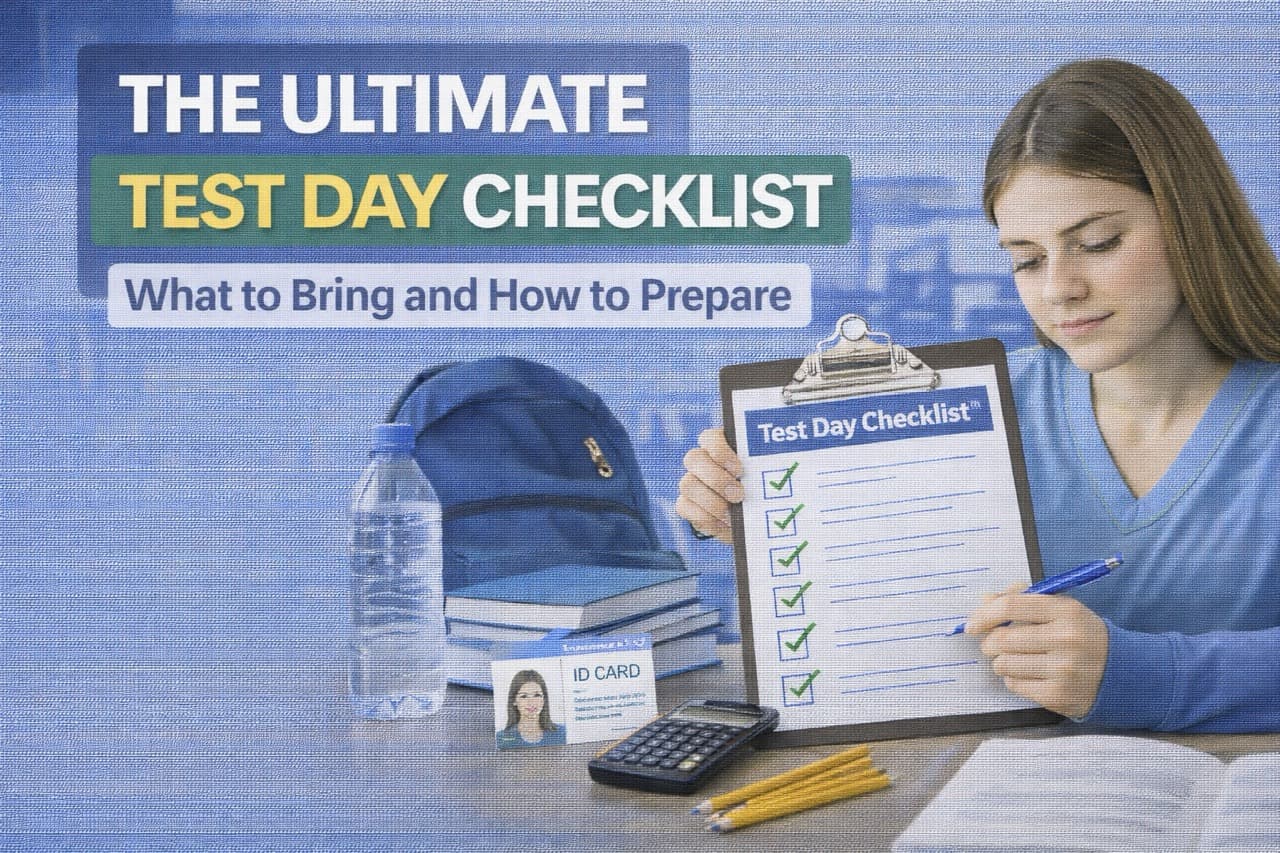
Here is your master test day checklist to review the night before and morning of your exam:
Night Before:
- ☐ Pack bag with ID, admission ticket, and supplies
- ☐ Lay out comfortable, layered clothing
- ☐ Set multiple alarms
- ☐ Prepare snacks and water
- ☐ Know your testing center location and parking
- ☐ Get 7-8 hours of sleep
Morning Of:
- ☐ Eat a balanced breakfast
- ☐ Final bag check - ID, ticket, all supplies
- ☐ Light review only if needed
- ☐ Leave early to arrive 30-45 minutes before start
- ☐ Use bathroom before entering testing room
- ☐ Take deep breaths and stay calm
Remember: all that studying you did matters, but so does showing up prepared and ready to perform. A solid exam day preparation routine ensures your hard work translates into results.
If you need additional support with exam preparation - whether that is study strategies, content review, or test-taking techniques - our exam assistance services can help you feel confident and ready on test day.
Now go pack that bag, get some rest, and show up ready to succeed. You have got this.
Frequently Asked Questions
What should I bring to my test on exam day?
The essentials include valid photo ID (usually government-issued), your admission ticket or confirmation email, approved calculators if allowed, number 2 pencils and erasers for paper tests, a watch without smart features, snacks and water for breaks, and any exam-specific items like scratch paper or rulers. Always check your specific exam requirements since different tests have different rules about what is permitted.
What time should I arrive at the testing center?
Plan to arrive 30 to 45 minutes before your scheduled exam time. This gives you time to check in, use the restroom, find your seat, and settle your nerves. For major exams like the GRE, MCAT, or LSAT, arriving early is especially important since late arrivals are often turned away with no refund. Traffic and parking can cause unexpected delays, so build in extra buffer time.
Can I bring my phone to the testing center?
Most testing centers require you to store your phone in a locker or leave it at the check-in desk. You cannot bring it into the testing room. Some centers like Prometric and Pearson VUE provide lockers, while others may require you to leave electronics in your car. Never attempt to bring a phone into the exam room - this will result in immediate disqualification and score cancellation.
What should I eat the morning before a test?
Eat a balanced breakfast with protein, complex carbohydrates, and healthy fats. Good options include eggs with whole grain toast, oatmeal with nuts and fruit, yogurt with granola, or a smoothie with protein. Avoid heavy greasy foods that might cause digestive discomfort, excessive sugar that leads to energy crashes, and too much caffeine which can increase anxiety. Eat 1 to 2 hours before your exam so you are not digesting during the test.
What if I forget my ID on test day?
Unfortunately, you will likely not be allowed to take the exam without valid ID. Most testing organizations have strict identification requirements with no exceptions. If you realize you forgot your ID before arriving, immediately call the testing center to ask about options - some may allow rescheduling without penalty if you notify them quickly. Always double-check your bag the night before to avoid this situation.
How do I calm my nerves on test day?
Practice deep breathing exercises - try inhaling for 4 counts, holding for 4, and exhaling for 4. Arrive early so you are not rushed. Avoid talking to anxious test-takers who might spread panic. Remind yourself that you have prepared and one exam does not define your future. Light stretching or a short walk before entering can help release nervous energy. If anxiety is severe, consider speaking with a professional about test anxiety strategies.
Should I study the morning of my exam?
Light review is fine, but avoid heavy studying that might increase anxiety. Spend 15 to 30 minutes reviewing key formulas or concepts you have already learned - this refreshes your memory without overwhelming you. Do not try to learn new material the morning of your exam. Focus on staying calm and confident rather than cramming last-minute information.
What should I wear to my exam?
Wear comfortable, layered clothing since testing room temperatures vary. Avoid anything too tight or restrictive. Layers let you adjust if the room is too hot or cold. Some testing centers prohibit hats, hoodies with large pockets, or jackets - check your specific exam rules. Dress appropriately but prioritize comfort since you will be sitting for hours.
Can I bring snacks into the testing room?
Usually no - snacks must stay in your locker or designated storage area. However, most exams have scheduled breaks where you can access your locker and eat. Pack easy-to-eat snacks like granola bars, nuts, fruit, or cheese and crackers. Avoid anything messy, strongly scented, or that requires refrigeration. Some testing centers may allow water bottles but check the specific rules for your exam.
What happens if I am late to my exam?
Policies vary by exam and testing center, but late arrivals are often turned away without a refund or ability to reschedule for free. For standardized tests like the SAT, GRE, and MCAT, doors close at the scheduled start time. If you know you will be late, call the testing center immediately - some may offer limited accommodations for emergencies. This is why arriving 30 to 45 minutes early is so important.
Do I need to print my admission ticket?
It depends on the exam. Many tests still require a printed admission ticket that includes your photo and testing information. Others accept digital confirmation on your phone, but remember your phone will be stored during the exam. When in doubt, print it. Having a backup never hurts, and some testing centers specifically require paper copies. Check your exam confirmation email for specific requirements.
What items are prohibited at testing centers?
Common prohibited items include cell phones and smart watches in the testing room, unauthorized calculators, notes or study materials, food and drinks in the testing area, large bags or backpacks in some centers, and electronic devices of any kind. Some exams also prohibit mechanical pencils, colored pens, or specific types of erasers. Review your exam specific rules carefully since violations can result in score cancellation.